The Ultimate Guide to Mastering Facebook Ads for Restaurants: Fill Your Tables Every Night
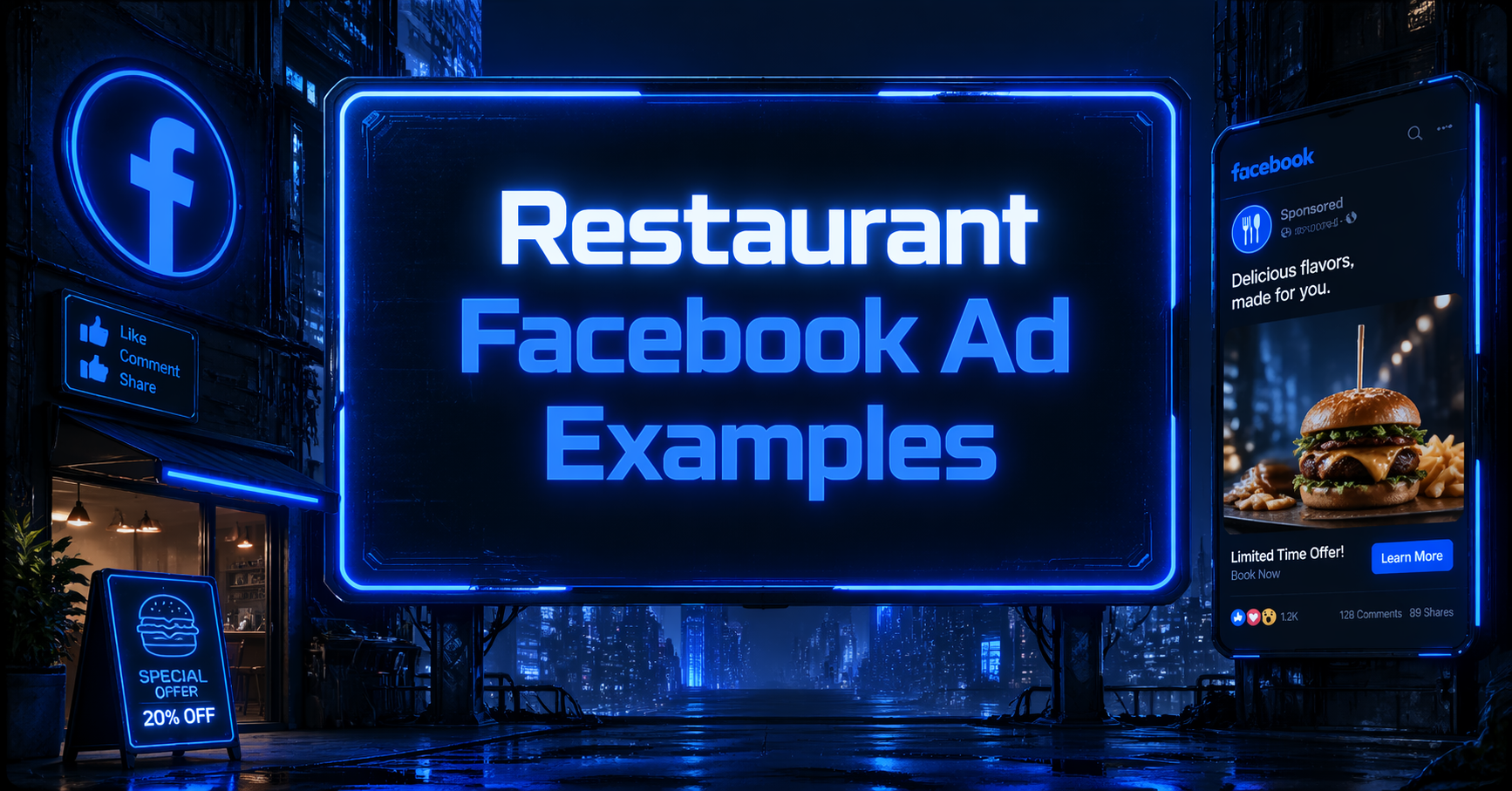
Are you tired of looking at empty tables on a Tuesday night?
In the highly competitive hospitality industry, serving incredible food is only half the battle. The other half is getting hungry diners through your doors. While word-of-mouth and organic social media are valuable, they are no longer enough to sustain predictable growth. This is where Facebook ads for restaurants become the ultimate game-changer.
With Meta’s unparalleled local targeting capabilities, visual-first platforms (Facebook and Instagram), and advanced machine learning, restaurant owners can now reach potential customers right when their cravings strike. Whether you run a cozy neighborhood cafe, a high-end fine dining establishment, or a bustling fast-casual franchise, a well-executed Meta advertising strategy is essential for driving foot traffic and boosting online orders.
Here is a comprehensive, E-E-A-T compliant, and SEO-optimized pillar article focused on the keyword "Facebook ads for restaurants". It is designed to be highly authoritative, providing deep, actionable insights for restaurant owners and marketers.
The Ultimate Guide to Mastering Facebook Ads for Restaurants: Fill Your Tables Every Night
Are you tired of looking at empty tables on a Tuesday night?
In the highly competitive hospitality industry, serving incredible food is only half the battle. The other half is getting hungry diners through your doors. While word-of-mouth and organic social media are valuable, they are no longer enough to sustain predictable growth. This is where Facebook ads for restaurants become the ultimate game-changer.
With Meta’s unparalleled local targeting capabilities, visual-first platforms (Facebook and Instagram), and advanced machine learning, restaurant owners can now reach potential customers right when their cravings strike. Whether you run a cozy neighborhood cafe, a high-end fine dining establishment, or a bustling fast-casual franchise, a well-executed Meta advertising strategy is essential for driving foot traffic and boosting online orders.
This comprehensive guide is built on proven digital marketing principles and real-world hospitality marketing expertise. We will break down exactly how to structure, create, and scale profitable Facebook ads for restaurants, ensuring you get the highest possible Return on Ad Spend (ROAS).
1. Why Facebook Ads for Restaurants Are Non-Negotiable
Before diving into the technical setup, it is crucial to understand why Meta's advertising ecosystem is perfectly tailored for the food and beverage industry.
The Power of Visual Persuasion
People eat with their eyes first. Food is an inherently emotional and visual product. Facebook and Instagram are visually driven platforms. A high-definition video of a sizzling steak or a perfectly crafted cocktail will stop a user from scrolling much faster than a standard text ad.
Hyper-Local Targeting
As a restaurant, your primary customer base usually lives or works within a 5 to 10-mile radius. Facebook allows you to drop a pin on your restaurant’s exact location and target users within a specific radius. You can even target people who are currently traveling in the area (perfect for tourist destinations).
Cost-Effective Customer Acquisition
Compared to traditional media like billboards, print flyers, or local radio, Facebook ads for restaurants offer precise tracking. You know exactly how many people saw your ad, clicked on your menu, or claimed your promotional offer, allowing you to optimize your budget down to the penny.
See More: The Ultimate Guide to Scaling Your Brand: Why You Need to Hire Facebook Ads Specialist Australia
See More: Elevating Your Brand: The Ultimate Guide to Partnering with a Facebook Advertising Agency Sydney
See More: The Ultimate Guide to Facebook Advertising Melbourne: Scaling Your Local Business
2. Laying the Groundwork: Before You Spend a Dime
Many restaurant owners waste money on ads because they skip the foundational steps. Before launching your first campaign, ensure these three pillars are firmly in place.
A. Install the Meta Pixel and Conversions API
If you take online reservations (via Resy, OpenTable, or your website) or accept online delivery orders, you must install the Meta Pixel and Conversions API on your website.
- What it does: It tracks user behavior (e.g., viewing a menu, booking a table) after they click your ad.
- Why it matters: It allows Facebook’s algorithm to learn what type of person is most likely to convert, optimizing your ads to find similar users. It also enables you to retarget people who visited your site but didn't book.
B. Optimize Your Facebook and Instagram Profiles
Your ads will drive traffic to your social profiles. Ensure they are optimized:
- Profile Picture & Cover Photo: Use high-quality, professional images of your logo and your best dishes or interior.
- Updated Information: Ensure your address, phone number, operating hours, and link to your digital menu are accurate.
- Action Buttons: Set up the "Book Now" or "Start Order" buttons on your page.
C. Invest in Professional Food Photography
Your ads are only as good as your creatives. Blurry, poorly lit smartphone photos will actively harm your brand. Hire a professional food photographer or learn basic food styling and lighting techniques. The visual must evoke an immediate craving.
3. Selecting the Right Campaign Objectives
When setting up Facebook ads for restaurants in the Ads Manager, the first step is choosing a campaign objective. Meta relies on this objective to decide who sees your ad.
1. Awareness (Local Reach)
- Best For: Grand openings, new menu launches, or staying top-of-mind in your local neighborhood.
- Strategy: This objective pushes your ad to as many unique people in your targeting radius as possible for the lowest cost.
2. Engagement
- Best For: Getting likes, comments, and shares, or encouraging people to message your page for event bookings.
- Strategy: Use this to build social proof. A video of your chef preparing a signature dish with high engagement signals to other users that your restaurant is popular.
3. Leads (Lead Generation)
- Best For: Building an email or SMS list, promoting private dining, or catering services.
- Strategy: Offer a "Free Appetizer on Your Birthday" in exchange for their name, email, and birthday month. This builds a highly valuable database you can market to for free later.
4. Sales / Conversions
- Best For: Driving direct online orders, selling gift cards, or securing online reservations.
- Strategy: Requires a fully functioning Meta Pixel. Facebook will show these ads to users who have a history of buying online or making digital reservations.
4. Hyper-Targeting Strategies for Restaurants
The true magic of Facebook ads for restaurants lies in the audience targeting. Here are four highly effective audience segments you should be using.
The "Hyper-Local Radius" Audience
Drop a pin on your restaurant’s address and set a radius of 1 to 5 miles (depending on whether you are in a dense city or the suburbs).
- Pro-tip: Combine this with demographic targeting. If you are a high-end steakhouse, narrow the local audience by targeting higher income brackets or interests in "fine dining" and "luxury goods."
The "Lunch Rush" Dayparting Strategy
If you want to boost lunchtime traffic, target people who work near your restaurant, not necessarily those who live there. Run ads highlighting your fast lunch specials exclusively from 10:30 AM to 2:00 PM on weekdays.
The "Life Event" Targeting (Birthdays & Anniversaries)
Facebook knows when users have upcoming birthdays or anniversaries.
- The Setup: Target users with an "Upcoming Birthday" or "Friends of people with upcoming birthdays" within your local radius.
- The Ad: "Looking for the perfect place to celebrate? Book your birthday dinner with us this month and dessert is on the house!"
Retargeting Warm Audiences
These are people who already know your brand. They are the cheapest to convert.
- Website Visitors: People who looked at your menu but didn't book.
- Social Engagers: People who have liked or commented on your posts in the last 90 days.
- Customer List: Upload your email list of past customers to keep them coming back.
5. Ad Formats That Make Diners Drool
Choosing the right format can drastically lower your Cost Per Acquisition (CPA). Here are the most effective formats for the hospitality industry.
1. Short-Form Video Ads (Reels & Stories)
Static images are good, but motion is better. High-energy, short videos (10-15 seconds) formatted vertically (9:16) for Facebook and Instagram Reels are currently the top-performing ad format.
- Content Ideas: A juicy burger being smashed on the grill, cheese pulls, a bartender mixing a colorful cocktail, or a quick "point of view" (POV) tour of the dining room ambiance.
2. Carousel Ads for Menus
Carousel ads allow you to display multiple images in a single ad, which users can swipe through.
- Best Use Case: Showcase a multi-course meal (Appetizer, Main, Dessert, Drink) or highlight different categories of your menu. Each card can link directly to that specific section on your online ordering platform.
3. Facebook Offers
Facebook has a native "Offer" ad format that allows users to save a discount code or coupon directly to their Facebook account. Facebook will then automatically remind them to use it before it expires.
- Example: "Buy One, Get One Free Entree - Valid Tuesday-Thursday."
6. Crafting the Perfect Restaurant Ad Copy
Your visuals stop the scroll, but your copy (the text) closes the deal. Great copywriting for restaurant ads should be concise, persuasive, and clear.
Use the AIDA Formula
- Attention: Hook the reader immediately. "Craving the best authentic tacos in Austin?"
- Interest: Describe the food to build desire. "Slow-roasted al pastor, hand-pressed corn tortillas, and our secret spicy salsa verde..."
- Desire: Add an incentive or social proof. "Voted 'Best Taco 2025' by Austin Weekly! Come see what the hype is about."
- Action: Give a clear Call-to-Action (CTA). "Click 'Book Now' to reserve your table tonight!"
Capitalize on FOMO (Fear Of Missing Out)
Use urgency and scarcity in your copy to drive immediate action.
- "Only 5 tables left for our Valentine's Day special tasting menu!"
- "Weekend Special: Fresh Maine Lobster Rolls. Available only until we sell out!"
Speak to the Customer's Needs
Are they looking for a quick, cheap lunch? A romantic date spot? A family-friendly environment with a kid's menu? Tailor your tone and vocabulary to the specific audience you are targeting.
7. Budgeting and Scaling Your Ads
A common question is: "How much should I spend on Facebook ads for my restaurant?"
The Testing Phase
If you are new to Meta ads, start with a daily budget you are comfortable losing while you gather data—usually around $10 to $20 per day, per campaign. Run your ads for at least 4 to 7 days without touching them. The Facebook algorithm needs time to exit the "learning phase" and figure out who responds best to your ads.
A/B Testing (Split Testing)
Never rely on just one ad. Test different variables to see what yields the cheapest results:
- Test Creative A vs. Creative B: (e.g., A video of a steak vs. A photo of a steak).
- Test Copy A vs. Copy B: (e.g., A long, descriptive caption vs. A short, punchy caption).
- Test Audience A vs. Audience B: (e.g., A 3-mile radius vs. A 5-mile radius).
Scaling Winners
Once you find an ad that is consistently driving reservations or orders at a profitable cost, slowly increase the daily budget by 15-20% every few days. Do not double the budget overnight, as this will reset the algorithm's learning phase and ruin your results.
8. Measuring Success: Key Metrics to Track
To ensure your marketing dollars are generating a positive return, you must monitor the right Key Performance Indicators (KPIs) in your Meta Ads Manager.
| Metric | What It Means | Why It Matters for Restaurants |
|---|---|---|
| CTR (Click-Through Rate) | The percentage of people who clicked your ad after seeing it. | A CTR above 1.5% means your food photos/videos and ad copy are engaging and relevant to the local audience. |
| CPC (Cost Per Click) | How much you pay every time someone clicks your ad. | Helps you understand how expensive your local market is. Lower CPC means more menu views for your budget. |
| CPA (Cost Per Acquisition) | The cost to acquire a booking, lead, or online order. | The most critical metric. If your average table spends $80, and it costs $10 in ads to get a booking, you have a highly profitable campaign. |
| Frequency | The average number of times a user has seen your ad. | If frequency creeps above 4 or 5, users will get "ad fatigue." It's time to change out your food photos. |
| ROAS (Return on Ad Spend) | Revenue generated divided by ad spend. | Determines overall profitability. (Only trackable if your POS or reservation system integrates with Meta). |
9. Common Mistakes to Avoid (The "Menu" of Errors)
Even with good intentions, many restaurants burn through their marketing budget by making these critical errors:
- Broad Targeting Across the Whole City: If you live in a massive metropolitan area (like New York or Ho Chi Minh City), targeting the entire city is a waste. People rarely drive 45 minutes across town in traffic for a casual dinner. Stick to your immediate radius.
- Using Cluttered Flyers as Ads: Do not take a printed flyer with a lot of text, logos, and tiny fonts and use it as a Facebook ad. Mobile users will scroll right past it. Rely on clean, striking imagery of your food.
- Ignoring the Comments Section: Ads will generate comments. If users tag their friends or ask, "Do you have gluten-free options?" and you do not reply, you are losing easy money. Community management on active ads is vital for building trust.
- Inconsistent Branding: If your ad promises a high-end, luxurious dining experience, but your landing page or digital menu looks cheap and is hard to navigate on a phone, the user will bounce (leave the site) immediately.
Conclusion: Turning Clicks into Covers
Implementing Facebook ads for restaurants is no longer a futuristic marketing tactic; it is a fundamental requirement for growth in the modern hospitality landscape. By combining mouth-watering creatives, hyper-local audience targeting, and strategic offers, you can build a predictable engine that brings new diners through your doors and turns them into loyal, repeat customers.
Start small, focus heavily on the visual appeal of your dishes, test your audiences locally, and always track your Cost Per Acquisition. With consistency and optimization, those empty Tuesday night tables will soon become a thing of the past.
- Telegram: @AdsAgency_FB
- Email: [email protected]
- Address: 1500 N Grant St Ste B, Denver, CO 80203