What's New in Facebook Ads by July 2026: 7 Major Updates Every Affiliate Marketer Should Know
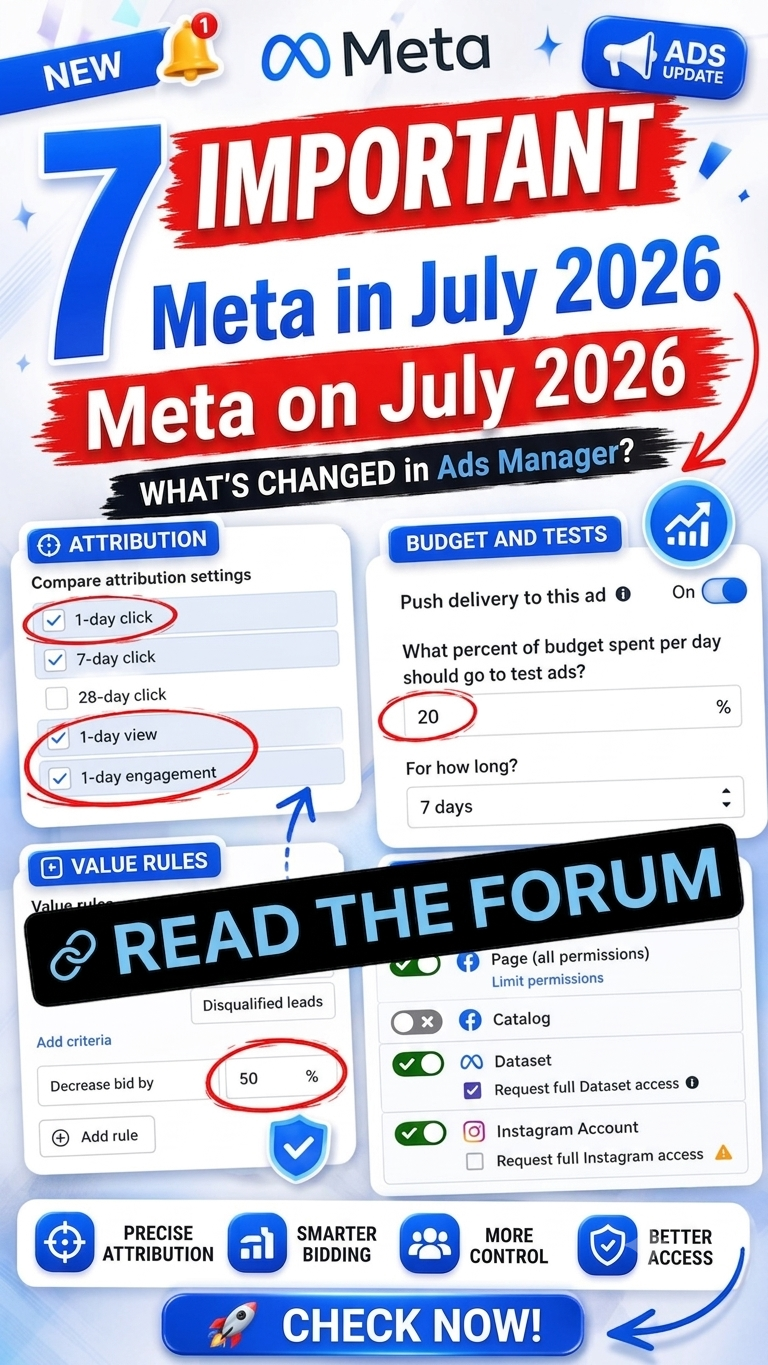
What's New in Facebook Ads by July 2026: 7 Major Updates Every Affiliate Marketer Should Know
Facebook Ads continues to evolve rapidly, and 2026 has introduced several changes that directly impact how affiliate marketers build, optimize, and scale campaigns.
Many of these updates aren't flashy new features—they're improvements to Meta's advertising system that influence campaign performance behind the scenes. From AI-driven automation to creative optimization and audience targeting, advertisers who adapt early are more likely to maintain stable results while reducing acquisition costs.
In this guide, we'll explore seven important Facebook Ads developments that every affiliate marketer should understand before launching or scaling campaigns in 2026.
Why These Updates Matter
Affiliate marketing has become increasingly competitive. Rising CPMs, stronger privacy protections, and changing user behavior mean that strategies that worked a year ago may no longer deliver the same results.
Instead of relying on manual optimization, Meta is investing heavily in machine learning to improve campaign performance. Advertisers who understand these changes can spend less time managing campaigns and more time improving creatives, offers, and landing pages.
1. AI Now Plays a Bigger Role in Campaign Optimization
Artificial intelligence has become the foundation of Meta's advertising platform.
Rather than simply matching ads to interests, the system now evaluates hundreds of signals in real time, including user behavior, purchase intent, device usage, engagement history, and contextual data.
For affiliate marketers, this means:
- Less dependence on detailed audience targeting.
- Better performance from high-quality creatives.
- Faster optimization for campaigns with enough conversion data.
- Greater importance of accurate tracking.
Instead of trying to "hack" the algorithm, advertisers should focus on feeding it better data through strong creatives and reliable conversion events.
2. Broad Targeting Continues to Outperform Narrow Audiences
One of the biggest shifts in recent years is Meta's increasing preference for broad targeting.
Many advertisers still create campaigns with dozens of interests, behaviors, and demographic filters. However, broader audiences often allow the algorithm to identify potential customers more efficiently.
Broad targeting offers several advantages:
- Larger reach.
- More delivery opportunities.
- Better optimization over time.
- Reduced audience overlap.
Interest targeting still has value in some situations, but it's no longer the primary driver of campaign success.
- See More: Facebook Financial Products Advertising Policy: Complete Compliance Guide for Advertisers (2026)
- See More: Facebook Ads Stuck in Review? 12 Reasons Why It Happens and How to Fix It (2026 Guide)
- See More: Facebook Return on Ad Spend (ROAS): The Complete Guide to Measuring and Improving Ad Profitability in 2026
3. Creative Quality Has Become the Strongest Performance Signal
Facebook's algorithm can only optimize campaigns if users interact with the ads.
Creative quality now influences:
- Click-through rate.
- Conversion rate.
- CPM.
- Cost per acquisition.
- Overall ROAS.
Successful affiliate advertisers refresh their creatives regularly instead of relying on a single winning ad.
High-performing creatives typically:
- Capture attention within the first few seconds.
- Focus on customer benefits rather than product features.
- Include a clear call to action.
- Match the landing page experience.
Testing multiple creative concepts often delivers better long-term performance than making constant targeting adjustments.
4. Advantage+ Campaigns Continue to Expand
Meta continues investing in Advantage+, making campaign management more automated.
Instead of manually configuring every setting, advertisers can allow the system to optimize:
- Audience selection.
- Placements.
- Budget distribution.
- Creative combinations.
- Delivery optimization.
While manual control remains available, many affiliate marketers find that Advantage+ simplifies campaign management, especially when promoting offers with broad appeal.
Automation doesn't replace strategy—but it can reduce the time spent on repetitive optimization tasks.
5. First-Party Data Is More Valuable Than Ever
Privacy regulations have changed how advertisers collect and use customer data.
As third-party tracking becomes less reliable, businesses increasingly depend on first-party data such as:
- Website visitors.
- Email subscribers.
- Customer lists.
- Purchase history.
- CRM audiences.
Affiliate marketers who build long-term audiences rather than relying solely on paid traffic often gain a competitive advantage.
Strong data collection also improves remarketing and lookalike audience performance.
6. Landing Page Experience Impacts Campaign Performance More Than Before
Driving traffic is only half the challenge.
If visitors leave your website without converting, the algorithm receives fewer positive signals, making optimization more difficult.
Modern landing pages should focus on:
- Fast loading speeds.
- Mobile-first design.
- Clear value propositions.
- Simple navigation.
- Trust signals such as testimonials, privacy policies, and secure checkout.
Even small improvements to the user experience can significantly increase conversion rates without increasing advertising spend.
7. Compliance and Transparency Continue to Shape Advertising Success
Meta continues refining its review systems to improve user trust.
Advertisers should pay close attention to:
- Accurate product descriptions.
- Honest marketing claims.
- Transparent pricing.
- Functional landing pages.
- Business contact information.
- Privacy policies.
Campaigns built on transparency are generally easier to maintain over the long term because they reduce unnecessary review delays and improve customer confidence.
How Affiliate Marketers Should Adapt
Instead of chasing every new tactic, successful advertisers focus on building stronger advertising foundations.
Recommended priorities include:
Invest More in Creative Testing
Fresh creative concepts help maintain engagement and reduce ad fatigue.
Improve Conversion Tracking
Reliable event tracking gives Meta better optimization signals.
Build Better Landing Pages
Higher conversion rates improve campaign efficiency without increasing budgets.
Simplify Campaign Structures
Too many campaigns and ad sets often slow optimization.
Consolidating similar audiences helps Meta learn faster.
Monitor Business Metrics
Instead of focusing only on CPM or CTR, evaluate:
- Cost Per Acquisition
- Return on Ad Spend
- Conversion Rate
- Average Order Value
- Customer Lifetime Value
These metrics provide a more complete picture of advertising success.
Common Mistakes to Avoid
Many affiliate marketers still:
- Change campaigns every day.
- Launch too many small audiences.
- Ignore creative fatigue.
- Focus only on lowering CPC.
- Pause campaigns before optimization completes.
- Neglect landing page quality.
Avoiding these habits can improve campaign stability over time.
Frequently Asked Questions
Are interest-based audiences becoming obsolete?
Not entirely. Interest targeting still works in some situations, but broader audiences combined with strong creatives often produce better long-term optimization.
Should I use Advantage+ for affiliate marketing?
It depends on your offer and goals. Advantage+ can simplify campaign management and improve automation, but advertisers should continue testing different approaches to find what performs best.
Is creative more important than targeting?
Increasingly, yes.
High-quality creative provides stronger engagement signals, allowing Meta's algorithm to optimize delivery more effectively.
How often should I update ad creatives?
There is no fixed schedule. Monitor performance metrics and refresh creatives when engagement declines or signs of ad fatigue appear.
Final Thoughts
Facebook Ads in 2026 is becoming increasingly automated, data-driven, and focused on user experience.
Rather than relying on overly complex audience setups or constant manual adjustments, advertisers who prioritize creative quality, accurate tracking, and transparent customer experiences are more likely to achieve sustainable results.
For affiliate marketers, success is no longer about finding shortcuts—it's about building campaigns that work with Meta's optimization systems instead of against them.
As the platform continues to evolve, adaptability, continuous testing, and a commitment to providing genuine value will remain the keys to long-term growth.