The Ultimate E-E-A-T Guide: How to Get More Leads from Facebook Ads
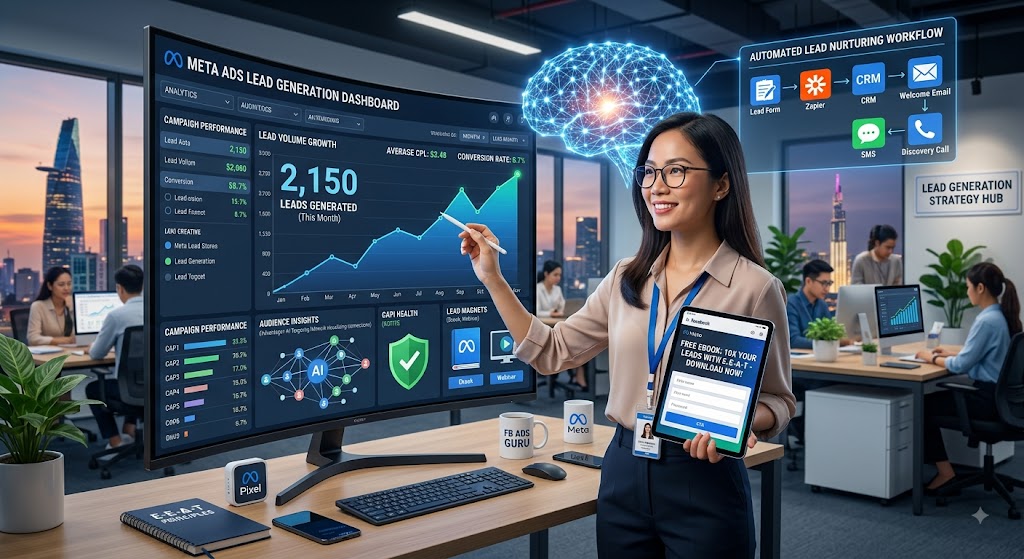
If you are a business owner, a digital marketer, or a media buyer, you already know that the digital advertising landscape is constantly shifting. Between privacy updates, rising competition, and the evolution of AI-driven algorithms, the strategies that worked five years ago simply do not cut it today. Yet, despite the hurdles, Meta (Facebook and Instagram) remains one of the most powerful performance marketing engines in the world.
If your primary goal is to get more leads from Facebook ads, you need more than just a basic campaign setup. You need a holistic, data-driven approach rooted in E-E-A-T principles: Experience, Expertise, Authoritativeness, and Trustworthiness. This comprehensive guide will walk you through the technical infrastructure, creative strategies, targeting methodologies, and optimization techniques required to scale your lead generation efforts sustainably and profitably.
1. The Foundation: Technical Infrastructure and Trust Signals
Before you spend a single dollar trying to get more leads from Facebook ads, you must ensure your tracking and technical infrastructure are flawless. In an era of data privacy and signal loss, Meta’s algorithm relies heavily on the data you feed it. If your data is inaccurate, your lead generation campaigns will fail.
The Meta Pixel and Conversions API (CAPI)
The Meta Pixel is a piece of code placed on your website to track user behavior. However, due to browser restrictions and ad blockers, the Pixel alone is no longer sufficient. To achieve true expertise in your media buying, you must implement the Meta Conversions API (CAPI).
- Server-Side Tracking: CAPI sends web events directly from your server to Meta, bypassing the browser. This ensures that even if a user has an ad blocker, their conversion data is securely and anonymously transmitted back to your ad account.
- Event Match Quality (EMQ): A high EMQ score means Meta can accurately match the lead data on your website to a Facebook user profile. The higher your EMQ, the better the algorithm can optimize to find similar users.
- Offline Conversions: If your leads close over the phone or in a physical store, uploading offline conversion data allows Meta to see which ads actually generate revenue, not just cheap leads.
Establishing Domain Authority and Trust
Meta actively monitors the destination of your ads. If your landing page looks spammy, loads slowly, or lacks essential trust signals, your ads will face higher costs (via higher CPMs) or get rejected outright.
- Privacy Policy & Terms of Service: Always link these in your ad’s lead form or your landing page footer.
- Page Speed: Ensure your landing page loads in under 3 seconds. Slow sites cause high bounce rates, telling Meta your ad is providing a poor user experience.
- Clear Value Proposition: Avoid clickbait. Your ad copy and landing page must align perfectly.
2. Crafting an Irresistible Lead Magnet
To get more leads from Facebook ads, you must offer something of undeniable value in exchange for the user's contact information. Users are highly protective of their email addresses and phone numbers. A generic "Subscribe to our newsletter" CTA will yield terrible results. You need a Lead Magnet.
What Makes a Great Lead Magnet?
A high-converting lead magnet solves a specific problem for a specific avatar. It should be easily consumable and deliver immediate gratification.
Top Lead Magnet Formats
- The Cheat Sheet or Checklist: Highly actionable and easy to consume. (e.g., "The 10-Point SEO Audit Checklist").
- Exclusive Webinars or Mini-Courses: Excellent for B2B or high-ticket B2C. This format builds massive authority and trust.
- Templates and Swipe Files: (e.g., "5 Proven Email Templates for Sales Outreach"). People love tools that save them time.
- Discount Codes or Free Shipping: The gold standard for e-commerce lead generation.
- Quizzes and Assessments: Highly interactive. Users trade their email to see their personalized results.
Expert Tip: Your lead magnet must align directly with your core product or service. Generating 1,000 cheap leads is useless if they have no interest in what you ultimately sell. Quality always trumps volume in lead generation.
3. Advanced Targeting Strategies in the AI Era
Historically, media buyers spent hours tweaking detailed targeting (interests, behaviors, job titles). Today, Meta’s machine learning is smarter than manual targeting. To get more leads from Facebook ads, you must lean into algorithmic targeting while providing the right "guardrails."
Advantage+ Audience and Broad Targeting
Meta's Advantage+ Audience uses AI to find your ideal customers based on your ad creative, copy, and past conversion data.
- How it works: You provide broad parameters (e.g., Age 25-55, United States), and Meta dynamically searches for users most likely to fill out your lead form.
- Why it works: It prevents audience fatigue and keeps your Cost Per Mille (CPM) low by targeting the maximum available inventory.
Lookalike Audiences (LALs)
Lookalike audiences remain a staple for scaling lead generation, but the source data is what matters.
- Tier 1 (Highest Intent): A 1% Lookalike of your highest-paying customers or users who have triggered a "Purchase" or "Closed Won" event.
- Tier 2 (Medium Intent): A 1-3% Lookalike of leads who have booked a call or opted into a high-friction webinar.
- Tier 3 (Top of Funnel): Lookalikes of engaged Instagram followers or website visitors.
Strategic Retargeting Funnels
Not everyone will become a lead on the first touchpoint. A robust retargeting strategy captures the "low-hanging fruit."
- Video Viewers: Retarget users who watched 50% or 75% of your top-of-funnel educational videos.
- Page Engagers: Retarget users who interacted with your Facebook or Instagram page in the last 30 days.
- Website Visitors & Cart Abandoners: Exclude existing leads and retarget website visitors with strong social proof, testimonials, or an escalated offer.
4. Ad Creative and Direct Response Copywriting
Your targeting dictates who sees your ad, but your creative dictates whether they care. The creative is now the primary targeting variable on Meta. If you want to get more leads from Facebook ads, your creative must do the heavy lifting.
The Anatomy of a High-Converting Lead Generation Ad
- The Hook (First 3 Seconds): Address the user's pain point immediately. Visually, use motion or an intriguing text overlay. Verbally, call out your target audience (e.g., "Struggling to lower your customer acquisition cost?").
- The Story/Value (Body): Empathize with the problem and position your lead magnet as the bridge to the solution. Use statistics or quick case studies to establish authority.
- The Call to Action (CTA): Tell them exactly what to do next. (e.g., "Click the link below to download your free guide instantly.")
Formats That Win
- User-Generated Content (UGC): Authentic, raw, selfie-style videos build immediate trust. They do not look like traditional ads, which lowers the user's "ad blindness" defense mechanism.
- Founder Stories: For high-ticket services or B2B, a polished video of the founder explaining the methodology builds immense authority and trust.
- Static Graphics with High Contrast: Sometimes, simple works best. A clean graphic highlighting the cover of your eBook or a massive discount code can drive incredibly low Cost Per Lead (CPL) due to its instant readability.
Copywriting Best Practices
- Use the "PAS" Framework: Problem, Agitation, Solution.
- Format for Readability: Use line breaks, emojis (sparingly), and short sentences.
- Test Long vs. Short Copy: Short copy works well for low-friction offers (discount codes). Long-form copy works exceptionally well for high-ticket lead generation (webinars, coaching) because it pre-qualifies the user before they even click.
5. Facebook Lead Ads vs. Landing Pages
One of the most common debates in digital marketing is where to send the traffic. Should you use Meta’s native Lead Forms, or send users to an external Landing Page?
Here is an expert breakdown to help you decide which is best for your campaign:
| Feature | Facebook Native Lead Ads (Instant Forms) | External Landing Pages |
|---|---|---|
| Friction Level | Extremely Low. Forms auto-fill with user data. | High. Users must wait for the page to load and type manually. |
| Conversion Rate | Generally higher due to native, seamless experience. | Generally lower, but highly dependent on page speed and design. |
| Cost Per Lead (CPL) | Typically lower. | Typically higher. |
| Lead Quality | Can be lower (accidental submissions, outdated emails). | Usually higher. Users demonstrated high intent by navigating your site. |
| Customization | Limited to Meta's UI templates and basic conditional logic. | Infinite. You control the branding, video placement, and copy length. |
| Best Used For | Top-of-funnel lead magnets, newsletters, simple quotes. | High-ticket services, complex B2B offerings, scheduling paid consults. |
See More: Maximize Your ROAS: The Ultimate Guide to Partnering with a Facebook Ads Optimization Service
See More: The Ultimate Guide: Standard Digital Marketing Agency Facebook Ads for Revenue Breakthroughs
The Hybrid Approach: High-Intent Lead Forms
If you want the low friction of a native Lead Ad but the high quality of a Landing Page, use Meta's "Higher Intent" form setting. This requires users to slide a bar to confirm their information before submitting, filtering out accidental clicks. Additionally, add one or two custom questions (e.g., "What is your biggest marketing challenge right now?") to qualify the lead instantly.
6. The Post-Click Experience: Nurturing Your Leads
Getting the lead is only 10% of the battle. If your follow-up sequence is broken, you are throwing ad spend out the window. A true expert knows that Lead Generation and Lead Nurturing are two sides of the same coin.
Immediate Automation is Mandatory
When a user submits their information, they must receive the promised deliverable within seconds.
- Integration: Use tools like Zapier or Make to connect Meta Lead Ads directly to your CRM (HubSpot, ActiveCampaign, Salesforce).
- The Welcome Email: Deliver the asset immediately. Introduce your brand, set expectations, and provide massive value before ever asking for a sale.
Multi-Channel Follow-Up
Do not rely solely on email, as open rates continue to decline.
- SMS Marketing: If you collect phone numbers, trigger an automated SMS thanking them for downloading the resource and asking a simple, open-ended question to start a conversation.
- The "Thank You" Page Offer: If using landing pages, utilize the "Thank You" page. Once they opt-in, immediately present them with a low-ticket, limited-time offer (a Tripwire) or a calendar link to book a discovery call. This capitalizes on their peak state of intent.
7. Budgeting, Bidding, and Campaign Architecture
Scaling your lead generation efforts requires a deep understanding of campaign architecture. Throwing money at a campaign without structure will lead to volatile results and wasted budget.
Campaign Budget Optimization (CBO) vs. Ad Set Budget Optimization (ABO)
- ABO (Ad Set Budget Optimization): Ideal for testing. By setting the budget at the ad set level, you force Meta to spend equally across different audiences or creatives. Use this to isolate variables and find winning combinations.
- CBO (Campaign Budget Optimization): Ideal for scaling. Once you have winning creatives and audiences, group them into a CBO campaign. Meta’s algorithm will automatically distribute the budget in real-time to the ad sets and ads generating the cheapest leads.
Bid Strategies
Most advertisers stick to Highest Volume (Lowest Cost) bidding. However, to exert more control over lead quality, consider:
- Cost Per Result Goal (Cost Cap): Tell Meta the maximum average amount you are willing to pay for a lead. If Meta cannot find leads at or below this cost, it will stop spending. This protects your profitability but can restrict delivery if your cap is too low.
The Testing Framework
To consistently get more leads from Facebook ads, you must be testing constantly. Follow the scientific method:
- Test One Variable at a Time: Do not change the audience, the video, and the headline simultaneously. If results improve, you won't know why.
- Creative Testing Campaign: Dedicate 10-20% of your budget strictly to testing new creatives in an ABO campaign.
- Scale the Winners: Take the ads that generate leads below your target Cost Per Lead (CPL) and move them into your main scaling CBO campaign.
8. Troubleshooting: Why Are Your Ads Failing?
Even experts experience campaigns that flop. The difference between a novice and a professional is the ability to diagnose the data and pivot. If you are struggling to get more leads from Facebook ads, diagnose your funnel using these key metrics:
High CPM (Cost Per 1,000 Impressions)
- The Problem: Meta is charging you a premium to show your ads.
- The Fix: Your audience might be too small or your ad quality ranking is low. Broaden your targeting, refresh your creatives to be more engaging, and ensure your landing page provides a stellar user experience.
Low CTR (Click-Through Rate)
- The Problem: People are seeing your ad but not clicking. Your CTR (Link Click-Through Rate) should ideally be above 1%.
- The Fix: Your hook is weak, or your offer isn't resonating with the audience. Test a completely different visual format (e.g., swap a graphic for a UGC video) and make your call-to-action more prominent.
High CVR (Conversion Rate) Drop-Off
- The Problem: Users click your ad (high CTR) but do not fill out the form.
- The Fix: There is a disconnect between your ad and your landing page. Ensure the headline on your landing page matches the promise made in the ad. Reduce the number of form fields—ask only for the absolute minimum information required (usually just First Name and Email).
Ad Fatigue
- The Problem: Your CPL was great for three weeks, but suddenly spiked. Look at your Frequency metric. If it is creeping past 3.0 or 4.0, your audience is sick of seeing the same ad.
- The Fix: Launch fresh creatives. You don't necessarily need a new offer; you just need to package it differently. Change the colors, swap the first 3 seconds of the video, or rewrite the primary text.
Conclusion
Learning how to get more leads from Facebook ads is not about finding a secret "hack" or a hidden toggle inside Ads Manager. It is a methodical process built on marketing fundamentals and E-E-A-T principles.
It requires a deep understanding of your target customer's pain points, the creation of high-value lead magnets, impeccable technical tracking, and highly engaging ad creative. By shifting your focus from "tricking the algorithm" to providing genuine value and a seamless user experience, you build a sustainable, high-converting lead generation engine that can scale your business for years to come. Start by implementing server-side tracking, craft an irresistible offer, test your creatives rigorously, and watch your pipeline fill up.
Tags: Rent Facebook Agency Ad Account
- Telegram: @AdsAgency_FB
- Email: [email protected]
- Address: 1500 N Grant St Ste B, Denver, CO 80203