
The Ultimate Guide to Facebook Ads for Healthcare: Compliance, Strategy, and Growth
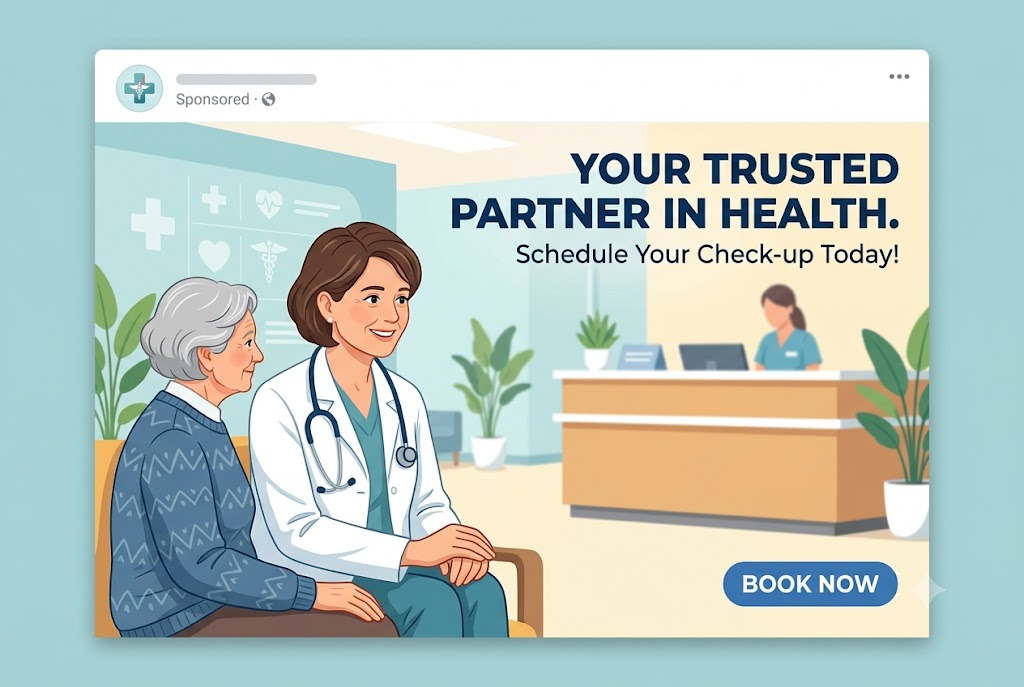
In the rapidly evolving digital landscape, medical practices, hospitals, and wellness clinics face a unique challenge. You need to attract new patients and grow your practice, but you must do so while navigating a complex web of privacy regulations and strict advertising policies. Facebook ads for healthcare represent one of the most powerful tools in a medical marketer's arsenal, offering unparalleled reach and demographic precision. However, executing these campaigns successfully requires a deep understanding of both digital marketing mechanics and healthcare compliance.
This comprehensive guide is built on the principles of. Whether you are marketing a local dental practice, a specialized orthopedic clinic, or a telehealth counseling service, this article will provide you with the exact strategies needed to run successful, highly compliant, and profitable Facebook ad campaigns.
The Power of Facebook Ads for Healthcare
When considering where to allocate your healthcare marketing budget, Facebook (and the broader Meta ecosystem, including Instagram) remains a dominant force. With billions of active users, the platform allows healthcare providers to reach potential patients precisely where they spend a significant portion of their daily digital lives.
Using Facebook ads for healthcare is not about diagnosing patients online; it is about building awareness, establishing authority, and guiding potential patients toward seeking professional help.
Here are the primary reasons healthcare organizations must leverage this platform:
- Unmatched Local Targeting: For brick-and-mortar clinics, Facebook allows you to draw a virtual radius around your practice, ensuring your ad spend only targets individuals who can realistically commute to your location.
- Educational Outreach: Healthcare is a high-trust industry. Facebook ads allow you to distribute educational content—like blog posts on managing joint pain or videos on pediatric dental care—establishing your doctors as local authorities.
- Patient Journey Alignment: From the initial awareness of a symptom to the final decision to book an appointment, Facebook ads can nurture leads at every stage of the patient journey.
- Demographic Precision: While health-based targeting is restricted, you can still target based on age, gender, location, and broad interests (e.g., "fitness," "parenting"), which are highly relevant for specific medical specialties like pediatrics or sports medicine.
Navigating the Minefield: Compliance and Meta Policies
The most critical factor in running Facebook ads for healthcare is compliance. Unlike e-commerce or local restaurant marketing, healthcare advertising is heavily scrutinized by both government regulators (like HIPAA in the United States or GDPR in Europe) and Meta’s own internal advertising policies.
Failing to adhere to these rules will not only result in disabled ad accounts but can also lead to severe legal and financial penalties.
1. Meta’s "Personal Attributes" Policy
Meta strictly prohibits ads that assert or imply that a user has a specific personal attribute. In the context of healthcare, this means you cannot write ad copy that implies the user suffers from a medical condition, disease, or mental health issue.
Meta’s algorithm is highly sensitive to the word "You" or "Your" when combined with medical terminology. Calling out a user's perceived health condition is seen as an invasion of privacy and a predatory marketing tactic.
2. Patient Privacy and HIPAA Compliance
For US-based healthcare providers, the Health Insurance Portability and Accountability Act (HIPAA) governs how Protected Health Information (PHI) is handled. When running Facebook ads, HIPAA comes into play primarily in two areas: Custom Audiences and Lead Generation.
You cannot upload a list of patient emails to Facebook to create a "Custom Audience" if those emails are tied to a specific medical condition (e.g., uploading a list of your diabetes patients to target them for a new treatment). Furthermore, if you use Facebook Lead Forms, you must ensure that the data collected is stored and transmitted in a HIPAA-compliant manner, often requiring third-party integrations and Business Associate Agreements (BAAs).
3. The Prohibition of Before-and-After Images
Meta’s advertising policies often flag and reject "before-and-after" imagery, particularly regarding weight loss, cosmetic surgery, and dermatology. The platform views these images as promoting unrealistic body images or making misleading guarantees about health outcomes. Instead of focusing on the physical transformation, your creative should focus on the patient's improved quality of life or the expertise of your medical staff.
Compliant vs. Non-Compliant Ad Copy
To illustrate the expertise required to write safe and effective Facebook ads for healthcare, let us look at specific examples of what to avoid and what to embrace.
See More: The Ultimate Guide to Mastering Facebook Ads for Restaurants: Fill Your Tables Every Night
See More: What's New in Facebook Ads by July 2026: 7 Major Updates Every Affiliate Marketer Should Know
See More: Facebook Ads Not Spending? 15 Reasons Your Campaign Isn't Delivering (And How to Fix It)
| Marketing Goal | Non-Compliant Ad Copy (Do Not Use) | Compliant Ad Copy (Use This) |
|---|---|---|
| Physical Therapy | Are you suffering from chronic lower back pain? Get relief today! | Learn how our advanced physical therapy techniques help relieve lower back pain. |
| Mental Health | Dealing with severe anxiety and depression? You don't have to fight it alone. | Managing anxiety requires a supportive team. Discover our counseling services today. |
| Dental Implants | Hide your missing teeth no longer! Get your confidence back with our implants. | Dental implants offer a permanent, natural-looking solution for restoring smiles. |
| Weight Loss Clinic | Need to lose 20 pounds fast? Try our new medical weight loss program! | Explore sustainable, medically supervised wellness programs designed for long-term health. |
Key Rule of Thumb: Always focus on the service, the clinic, or the general condition, rather than the individual user. Frame your copy around education and solutions, not the user's personal affliction.
Crafting High-Converting Healthcare Ad Creative
Once you understand the boundaries of compliance, the next step is designing creatives that actually convert. Healthcare is a "Your Money or Your Life" (YMYL) topic. People only click on ads from institutions they trust. Your creative must exude professionalism, empathy, and authority.
Video Marketing is Non-Negotiable
Video is the most effective format for building trust. When potential patients see a doctor speaking directly to the camera, explaining a procedure, or offering health tips, it humanizes the practice.
- Record "Meet the Doctor" videos.
- Create short Q&A videos answering common patient questions.
- Show behind-the-scenes tours of your clinic to reduce patient anxiety.
Patient Testimonials (With Proper Consent)
Social proof is incredibly powerful in healthcare. If a patient is willing to share their success story, it can drastically improve your ad's Return on Ad Spend (ROAS). However, you must obtain written, HIPAA-compliant consent from the patient specifically allowing their image and story to be used in social media advertising. Keep the testimonials focused on the high quality of care and the friendly staff, rather than specific medical guarantees.
High-Quality Custom Photography
Avoid sterile, obvious stock photos of doctors shaking hands with models. Users scroll right past them. Instead, invest in a professional photoshoot of your actual staff, your waiting room, and your treatment areas. Authenticity drives engagement. Show your staff smiling, interacting with each other, and projecting a welcoming environment.
Advanced Targeting Strategies for Medical Practices
Because you cannot target users based on their specific medical history or ailments, you must use intelligent, compliant workarounds to reach the right audience.
1. Broad Targeting and Creative Filtering
One of the most effective strategies today is allowing Meta’s machine learning algorithm to do the heavy lifting. Instead of trying to find the perfect micro-audience, use broad geographic and age targeting (e.g., Men and Women, Ages 35-65+, within 15 miles of your clinic).
You then use your ad copy and creative to filter the audience. If your ad clearly states, "Advanced Treatment Options for Knee Osteoarthritis," only people interested in that topic will stop scrolling, click, and engage. The algorithm will notice who is engaging and automatically start showing the ad to similar people.
2. Location-Based and Demographic Targeting
For primary care, urgent care, and pediatricians, convenience is often the deciding factor for patients. Utilize strict radius targeting around your clinic. Combine this with demographic targeting. For example, a pediatric dentist should target "Parents of toddlers" or "Parents of early school-age children" within a 10-mile radius.
3. Retargeting Website Visitors
If a user visits the "Dental Implants" page on your website, they have shown high intent. You can use the Meta Pixel to retarget these visitors with ads offering a free consultation.
- Ensure your privacy policy clearly states the use of tracking cookies.
- Do not retarget highly sensitive medical conditions (e.g., oncology or severe mental health conditions) as this can feel intrusive and violate privacy expectations.
Designing a Trustworthy, High-Converting Landing Page
Your Facebook ad is only half the battle. If a user clicks your beautifully crafted, highly compliant ad and lands on a slow, confusing, or untrustworthy website, you have wasted your money. The landing page must adhere to the same strict E-E-A-T standards as your ads.
Maintain Message Match
If your Facebook ad promotes a specific service, such as Invisalign, the user must land on a page dedicated entirely to Invisalign. Do not send them to your homepage and force them to hunt for the information. The headline on the landing page should mirror the headline of the ad.
Establish Immediate Authority (Expertise & Trust)
As soon as the page loads, the user should feel they are in safe hands. Include:
- High-resolution logos of medical associations your doctors belong to.
- Badges of awards (e.g., "Voted Best Local Pediatrician 2025").
- Clear, professional headshots of the medical providers.
- Links to verified reviews from Google or Healthgrades.
Secure and Compliant Contact Forms
If you are collecting patient information, security is paramount. Your website must have an active SSL certificate (HTTPS). Furthermore, if you are asking for anything beyond basic contact info (name, email, phone), ensure the form processing tool you use is HIPAA-compliant. Keep the barrier to entry low; only ask for the information absolutely necessary to schedule the initial consultation.
Measuring Success: KPIs in Healthcare Advertising
To ensure your Facebook ads for healthcare are generating a positive return on investment, you must track the right Key Performance Indicators (KPIs). In healthcare, a "conversion" is rarely a direct online purchase; it is usually a lead or a booked appointment.
Cost Per Lead (CPL)
This is the amount you spend to acquire one user's contact information. What constitutes a "good" CPL varies wildly by specialty. A lead for a routine dental cleaning might cost $15, while a lead for complex orthopedic surgery might cost $150. You must know your patient lifetime value (LTV) to determine if your CPL is profitable.
Appointment Show Rate
Generating leads is useless if they do not walk through your clinic doors. Track how many Facebook leads actually schedule an appointment, and more importantly, how many show up. If your show rate is low, your front desk team may need better follow-up scripts, or your ads might be attracting low-intent clickers.
Return on Ad Spend (ROAS)
Ultimately, this is the metric that matters most. How much revenue did the campaign generate compared to the ad spend? To calculate this accurately, you need a robust Customer Relationship Management (CRM) system that can track a lead from their initial Facebook click all the way to their final medical billing.
The Role of the Meta Pixel and Conversions API (CAPI)
Tracking in healthcare advertising is currently undergoing a massive shift due to increased data privacy regulations. Historically, marketers relied heavily on the Meta Pixel—a piece of code on the website that tracks user behavior.
However, recent legal rulings and privacy guidelines have scrutinized the use of tracking pixels on sensitive healthcare websites, particularly on patient portals or appointment booking pages where PHI might be inadvertently transmitted to Meta.
To maintain E-E-A-T and strict compliance:
- Audit your website to ensure the Meta Pixel is not firing on pages containing sensitive medical information or patient portals.
- Implement the Conversions API (CAPI). CAPI allows your web server to send conversion events directly to Meta's servers. This gives you far more control over exactly what data is shared, allowing you to strip out any potentially identifying health information before the data reaches Facebook, ensuring better compliance while still optimizing your campaigns.
Conclusion: Building a Sustainable Patient Pipeline
Mastering Facebook ads for healthcare is an ongoing process of balancing aggressive marketing goals with strict ethical and legal boundaries. By focusing on the E-E-A-T principles—demonstrating your Experience through real patient stories, showcasing your Expertise with educational content, building Authoritativeness through proper credentials, and maintaining absolute Trustworthiness via rigorous compliance—you can turn Meta's platform into a highly reliable engine for practice growth.
Remember that healthcare marketing is not about quick tricks or clickbait. It is about being present, professional, and helpful when a potential patient is seeking a solution to their health concerns. Approach your Facebook advertising strategy with empathy and strict adherence to policy, and you will build a sustainable, scalable patient pipeline that serves your practice for years to come.
- Telegram: @AdsAgency_FB
- Email: [email protected]
- Address: 1500 N Grant St Ste B, Denver, CO 80203